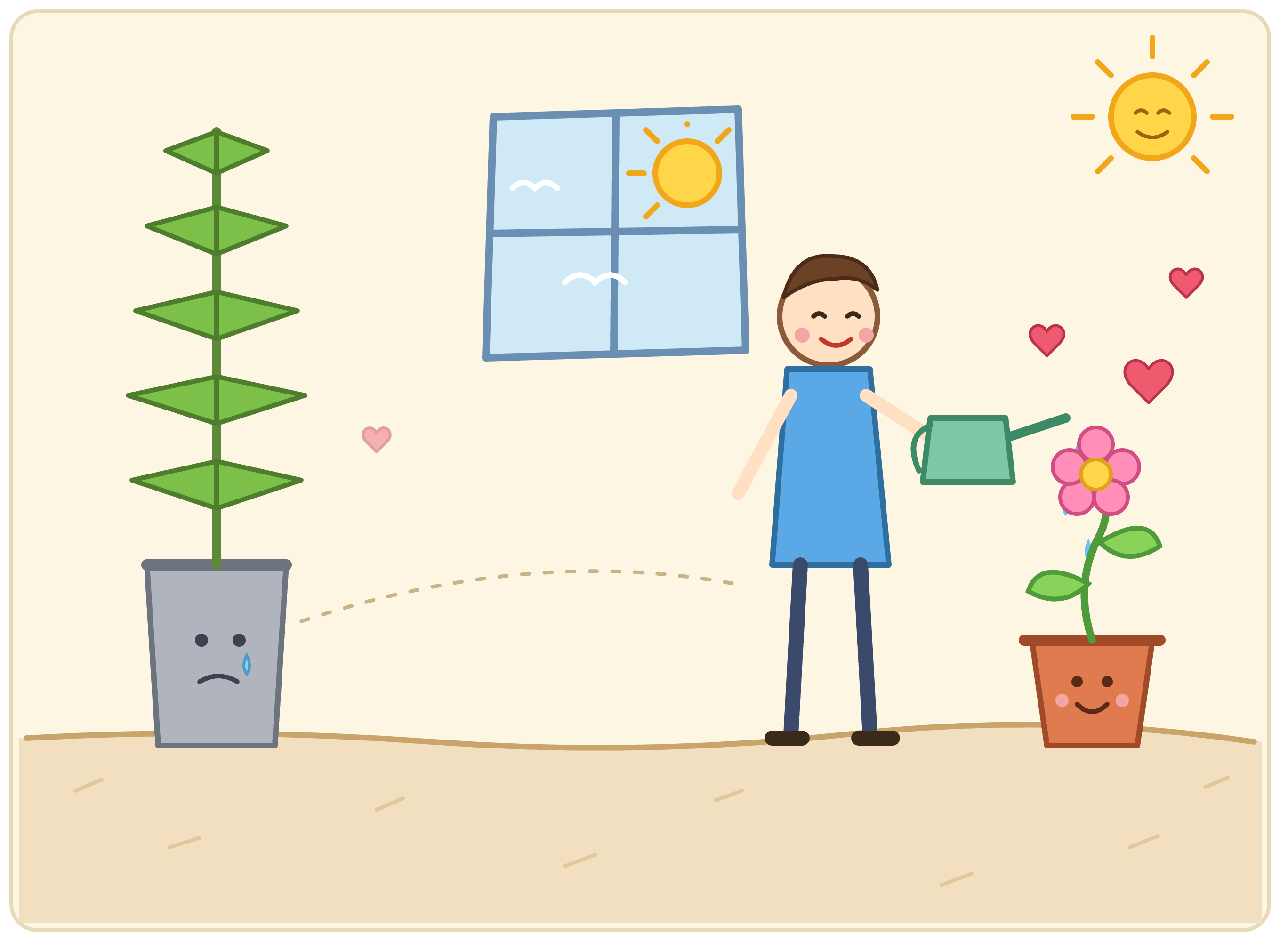
Once, a man brought home two plants. The first was tall, long, and beautifully shaped. It was artificial; it needed no water, no sunlight, and no nourishment. It would never wither, fall, or die. It would remain beautiful forever, standing tall in one corner of the room. The second was a small, natural plant. It needed to be watered, nurtured, and cared for every single day. It was fragile, dependent on the master’s care, and could not survive without it.
Every day, the master watered this little plant, spoke to it, looked at it, and cared for it. The artificial plant would look down at it and say, “Stop being so dependent. Look at me. I need no one. I don’t need to be watered or taken care of, and yet, look how beautiful I am. I can stand tall all by myself.” And the little plant continued to grow, slowly becoming taller, stronger, and more beautiful with every passing day.
The artificial plant began to feel out of place. “Why does the master give her so much attention? Why does he speak to her, look at her, and spend so much time caring for her? She will wither one day. She will die. I am the one who is beautiful. Look at me, master. Look how tall I am, how perfectly I stand. I will never break.” But the master continued to nurture the little plant.
And one day, the artificial plant realised something it had never understood before. It had spent so long being proud of needing nothing that it had never known what it felt like to be cared for. It had mistaken its inability to wither for strength, its permanence for worth, and its independence for happiness.
For the first time, it no longer wished to be the tallest, the prettiest, or the most unbreakable plant in the room. It wished to be the little plant – the one that could bend when the wind blew, wither when neglected, and needed water, sunlight, and a gentle hand to survive and flourish. Not because it wanted to be weak, but because it wanted to experience what it meant to be nurtured. It wanted someone who would notice when its leaves began to droop, water it before it dried out, and care for it not just when it looked beautiful, but also when it was struggling to stay alive. It wanted to be loved with consistency.
And that was when the artificial plant finally understood: it had spent its entire life trying to be something that could never break, only to realise that what it truly wanted was someone who would care for it when it did. Perhaps the greatest tragedy was never that the artificial plant could not die, but that it could never truly live. And perhaps the beauty of the little plant was never how beautifully it bloomed, but that someone kept showing up to help it bloom.
Sometimes, we don’t want to be the person who needs nothing. We want to be the person whose needs are met with love – a love that is consistent.
a contribution by Shirene Vritika Borneo
Leave a Reply