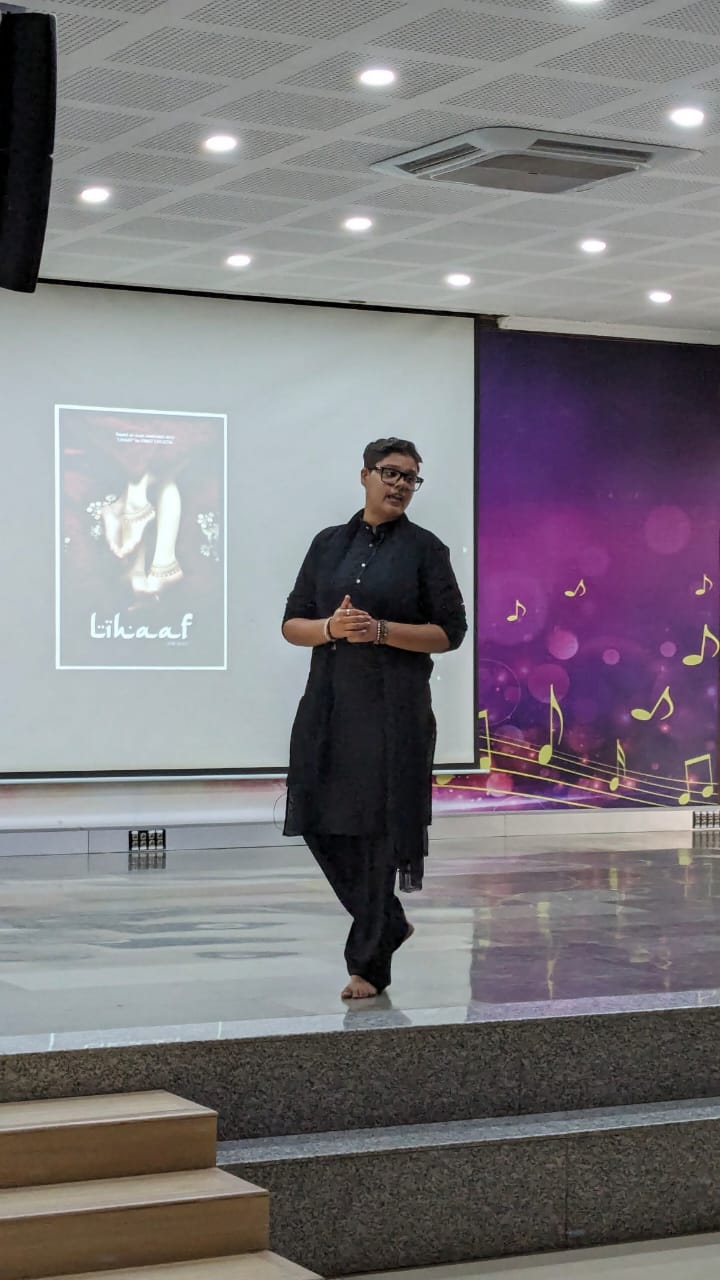
Applied drama and performative action is the telling of the truth in symbolic clothing. This book is a narrative inquiry with the primary purpose of inquiring into the dramatic arts as an action agenda in developing individual readiness to institutional change. The study explores the effect of using drama as a set of tools to help reflect on leadership and individual values and beliefs, specifically in academia, since these values and beliefs have a fundamental impact on determining individual effectiveness in the context of the academic institution. This study explores how value frameworks in academia can be reimagined through a dramatic intervention that is directed towards redefining value congruence.
By applying dramaturgy & theatre as structured interventions to drive institutional change as an exploratory approach to narrative inquiry, the study acknowledges and draws from the work done by prominent sociologists, management theorists, practitioners and drama practitioners in the evolution and development of the art form so as to invoke and steer incremental and radical change in the socio-cultural arena that dominates individual & institutional action in academia.
This study emanates from the submission that change management interventions need to employ a greater focus on developing ‘value congruence’ between the individual and the institution through an emotionally compelling instrumentality, specifically theatre (otherwise read as drama) for the purpose of this study, rather than externally oriented levers which are employed through prescriptive artefacts for motivation in provoking a readiness to change. Theatre, by design, becomes a dialogic intervention that can be applied as a distinctive change-inducing agent emphasizing on changing the conversational narratives that take place in an institution of learning.
This study recognises, through various available studies, the importance of value congruence, culture and performance effectiveness criteria as key variables/constructs which intersect and drive institutional design and strategic change. Through this study, we examined the proposition that authentic self-expression can be advanced through an immersion in dramatic performative action in a teaching and learning environment. The act of such authentic self-expression and occupational fulfilment is actualised when one is in one’s ‘element’, which is the meeting point between one’s natural aptitude and personal passion.
Through theatre tools and techniques designed for reflexive and reflective action, the participant will confront the truth of a current or a past reality (impressions) that impede personal growth. Through the application of a dramatic intervention, breaking through mind barriers emerge as ‘possibilities’ by navigating through human contradictions and congruencies and arriving at a new reality that is disconnected from the influences of a past that the participant wishes to disengage future behaviours from.
Drama as a performative dialogic intervention becomes a distinctive change-inducing intervention which emphasises the changing nature of conversations that usually take place in an academic organisation. Most importantly, this process of change is free from coercive methods that attempt to indoctrinate or attempt to regulate behaviour through a rule book or external levers that force outcomes irrespective of individual willingness or internal motivation. Drama emphasises its focus less on the ‘right’ answer and leans more dominantly on reflexive devices to enable the practitioner to reflect on and review core behavioural components through the application of a systematised dramatic strategy for the practitioner in order to facilitate fundamental change.
This study primarily applies the principles of Augusto Boal’s ‘Theatre of the Oppressed’, as a Participatory Action Research framework to engender and build value congruence by reimagining images, narratives and social constructs that are held by individuals within the workplace and enabling a mindset that is ready for a ‘values-driven’ change mindset. Working with psychologically embedded narrative-building through storytelling, which is both emotionally and cognitively satisfying, ‘Theatre of the Oppressed’, through its various devices, brings in a personal authenticity and intimate socialised engagement that is missing in traditional change-management initiatives.
The study employs descriptive data that is derived through the dramatic interventions by examining the experiences of the participants in the development of a value-based readiness to personal change. The intervention methodology works on building value congruence by reimagining narratives and social constructs that are held in the individual’s subconscious and which get organically played out without active reflection.
This study, which finds a significant association between the independent and dependent variables, aims to supplement existing tools and devices in change management with theatre-based artistic devices which have historically influenced and driven civilisational change by not merely theorising the problem but by authentically examining deeply held personal beliefs that determine how people engage with each other and impact the cultural nuances of performance effectiveness.
Through these interventions, which were conducted in an Indian academic setting, the exploration of theatre as a participatory device in behavioural discovery through dramatic form demonstrates that dramatic participative research can provoke change in individuals and groups who work together through this form of authentic ‘action research’.
The exploration of dramatic action in behavioural discovery has demonstrated that dramatic participative action can provoke change in individuals and groups. Participants experience an increase in self-image and confidence, creating possibilities for managing a more holistic self-determination and group assimilation. Theatre as an intervention can effectively enable a more reflective exploration of the human experience in teaching and learning. Further research in the area of readiness for change can be conducted using the dramatic art form in various areas of performance effectiveness, including leadership assessment and development in the academic environment.
Leave a Reply